Hommikusöök Soroca hotelli pakutavate teenuste hulka ei kuulunud. Restoran, kus me õhtust sõime avati alles kell 11. Seega startisime tühja kõhuga, aga muidu valmis uuteks väljakutseteks Ukrainas.
Breakfast was not included in the services offered by Soroca hotel. The restaurant where we ate dinner only opened at 11 o’clock. So we started with an empty stomach, but otherwise ready for new challenges in Ukraine.
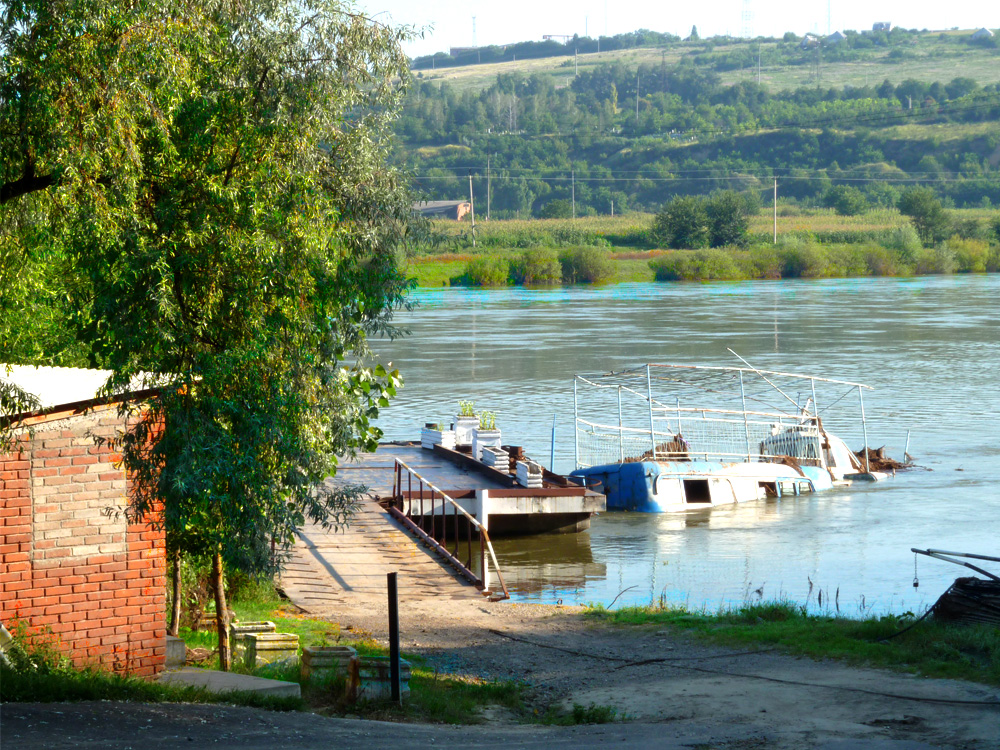
Hotellist saadud info põhjal viib Ukrainasse naaberkülas olev praam. Peale lühikest sõitu ja kohalikult teeääres seisvalt politseinikult tee küsimist leidsime selle üles. See ei ole mitte aga selline praam nagu Rumeenias, vaid tavaline rauast pontoon, mis mööda jõest läbi minevat trossi liigub. Enne aga kui praamisõidu juurde asuda, mõned sõnad veel Moldova piirist.
Based on information from the hotel, a ferry in a neighboring village leads to Ukraine. After a short ride and asking directions from a local policeman standing by the roadside, we found it. However, it’s not a ferry like in Romania, but an ordinary iron pontoon that moves along a cable running through the river. But before getting to the ferry ride, a few words about the Moldovan border.
Kõik piiripunkti töötajad olid väga viisakad ja vastutulelikud. Kontrolliti ära meie passid, seksikas tollitöötaja esitas meile mõned küsimused ja võisimegi Moldovast lahkuda. Praamil saime jutuotsapeale kohalike noormeestega. Seletasime neile oma reisimarsruuti ja lobisesime niisama. Vene keel on ikka üks imeline keel, alates Moldovast saime igas riigis inimestega vabalt suhelda. Rumeenias sai inglise ja prantsuse keelega küll hädapärased jutud aetud, aga päris lobisemiseni seal ei jõudnud.
All border checkpoint staff were very polite and accommodating. They checked our passports, a sexy customs officer asked us some questions, and we could leave Moldova. On the ferry we got talking with local young men. We explained our travel route to them and chatted casually. Russian really is a wonderful language, starting from Moldova we could freely communicate with people in every country. In Romania we could have basic conversations in English and French, but we didn’t quite reach the level of real chatting there.
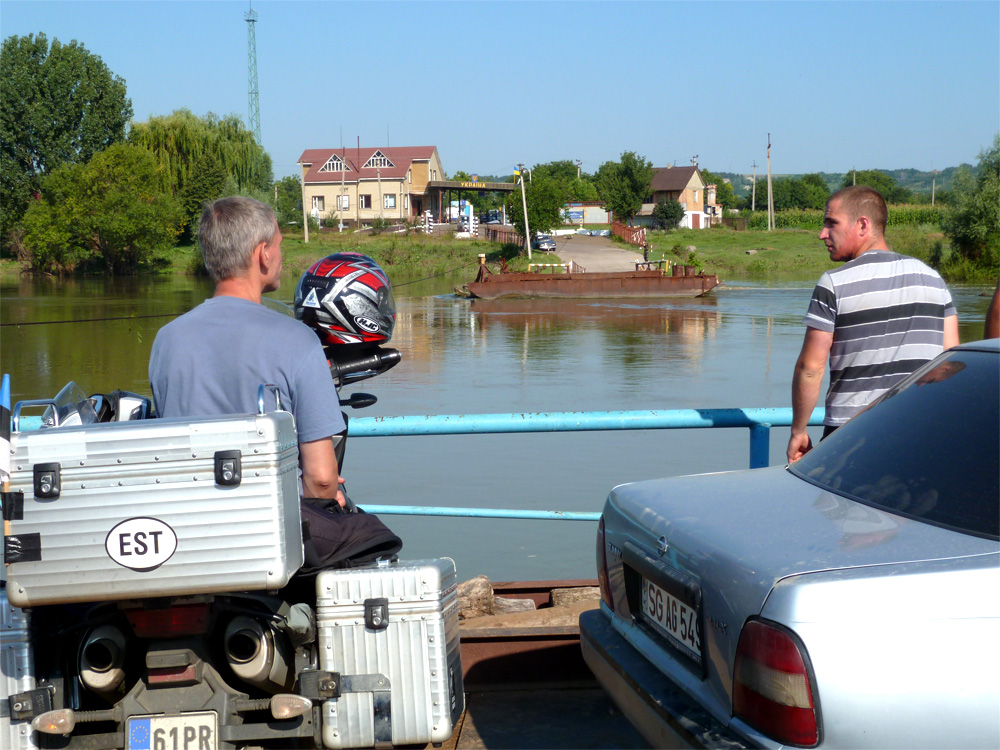
Üle jõe liikus praam jõe voolu mõjul. Kui hakkasime jõudma vastaskaldale, pidi praami opereeriva abielupaari naispool metallist konksuga pidurdama trossi liikumise. Perepea aga kogus kokku praamil olevad mehed, kes ühise jõuga praami pootshaagi abil randumissilla vastu tõmbasid. Ilmselt ei ole selle praamiga ainult naistest koosneva reisijaskonnaga jõe ületamine võimalik 🙂
Ukraina piir oli juba teismoodi. Seal pidi ära täitma paar paberit. Kuna me kasutasime ladina tähti, siis tuli need veelkord vene tähtedega täita. Ühesõnaga läks seal pisut aega, piirivalvurid uudistasid meie ratast, isegi pildistasid mobiilidega, Teet viskas nendega paar nalja ja lubatigi meid lahkelt Ukraina pinnale. Enne, kui veel ratta selga istusime, astus üks kuldhammastega mees ligi ja ütles ilusas eesti keeles “Tere”. Tuli välja, et ta on kunagi Tallinnas õppinud, mäletas veel mõnesid eestikeelseid väljendeid. Nii tore kohtumine!
The ferry moved across the river by the influence of the river current. When we started to reach the opposite shore, the wife of the married couple operating the ferry had to brake the cable’s movement with a metal hook. The head of the family gathered together the men on the ferry, who with combined force pulled the ferry against the landing ramp using a boat hook. Apparently it’s not possible to cross the river with this ferry with a passenger group consisting only of women 🙂
The Ukrainian border was already different. There we had to fill out a couple of papers. Since we used Latin letters, they had to be filled out again with Cyrillic letters. In short, it took some time there, border guards were curious about our bike, even took pictures with their mobiles, Teet cracked a couple of jokes with them and we were kindly allowed onto Ukrainian soil. Before we got back on the bike, a man with gold teeth came up and said in beautiful Estonian “Hello”. It turned out that he had once studied in Tallinn, still remembered some Estonian expressions. Such a nice encounter!
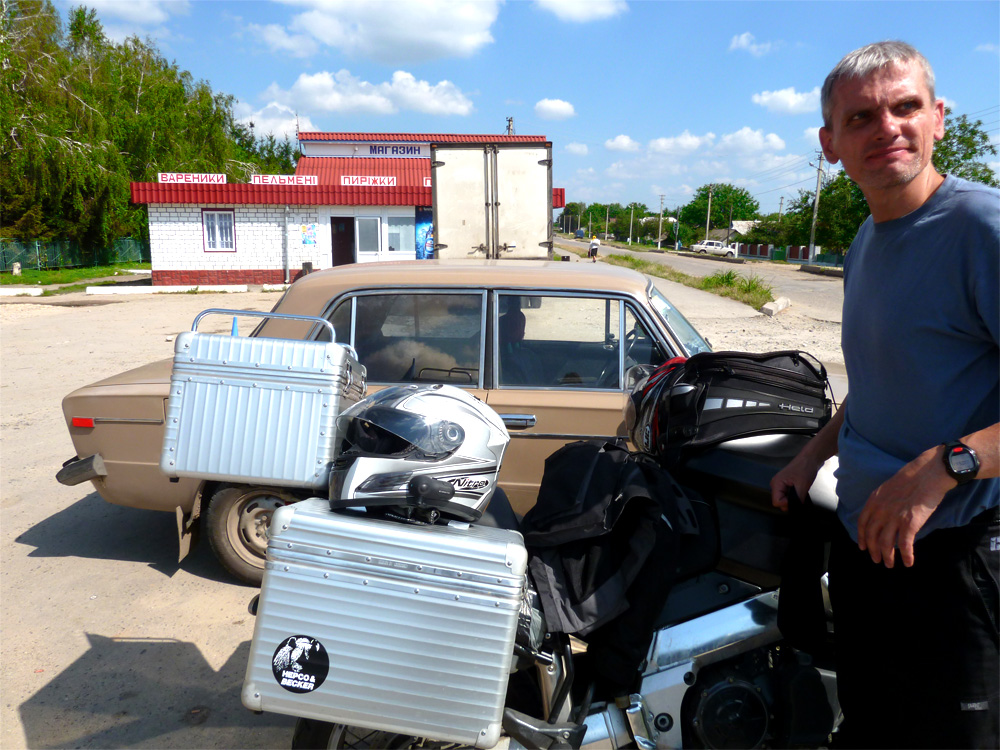
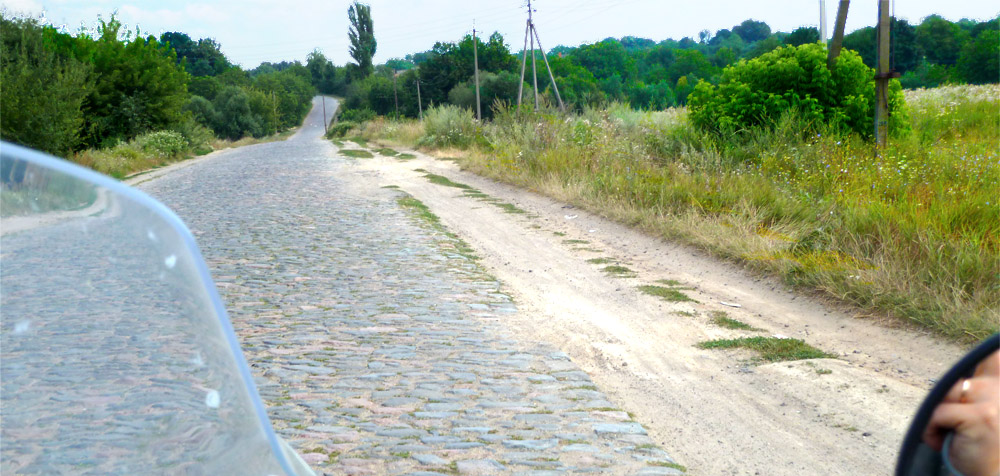
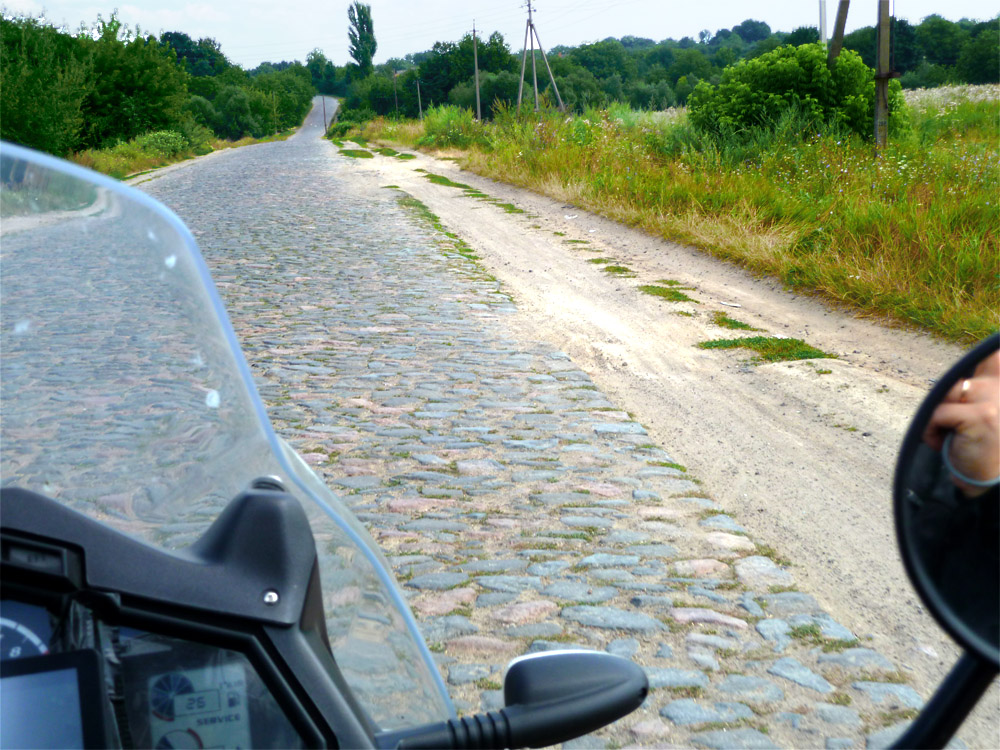
Peale Moldova teid tundusid Ukraina teed üsna sõidetavatena. Küladevahelised lõigud olid suhteliselt heas korras. Külades oli auke nii suuremaid kui ka väiksemaid. Vaid üks kahekilomeetrine teelõik oli kaetud päris korraliku munakivisillutisega. Ei kadesta sugugi endisaegseid reisilisi, kes tõldadega mööda selliseid teid liikuma pidid.
After Moldovan roads, Ukrainian roads seemed quite drivable. The sections between villages were in relatively good condition. In villages there were both larger and smaller potholes. Only one two-kilometer road section was covered with quite proper cobblestone pavement. I don’t envy at all the travelers of old who had to move along such roads with carts.
Mida lähemale jõudsime Kiievile, seda paremaks ja laiemaks teed muutusid. Kiievi ümbersõit läbis veidi ka linnaserva, nii et nägime kõrgeid korrusmaju ja laiu prospekte. Avanev pilt linnast oli igatahes väga kena. Tänavatel aga olukord nii lõbus ei olnud. Kuna kell oli juba viie ja kuue vahel õhtul ja ühes kohas oli suur teeremont, siis liikus autodevool vahepeal meeterhaaval. Hea oli see, et võõramaalastest mootorratturitesse suhtuti hästi ja vajadusel lasti ilusti vahele. Meie teekond jätkus päeva lõpppunkti Chernigovi poole.
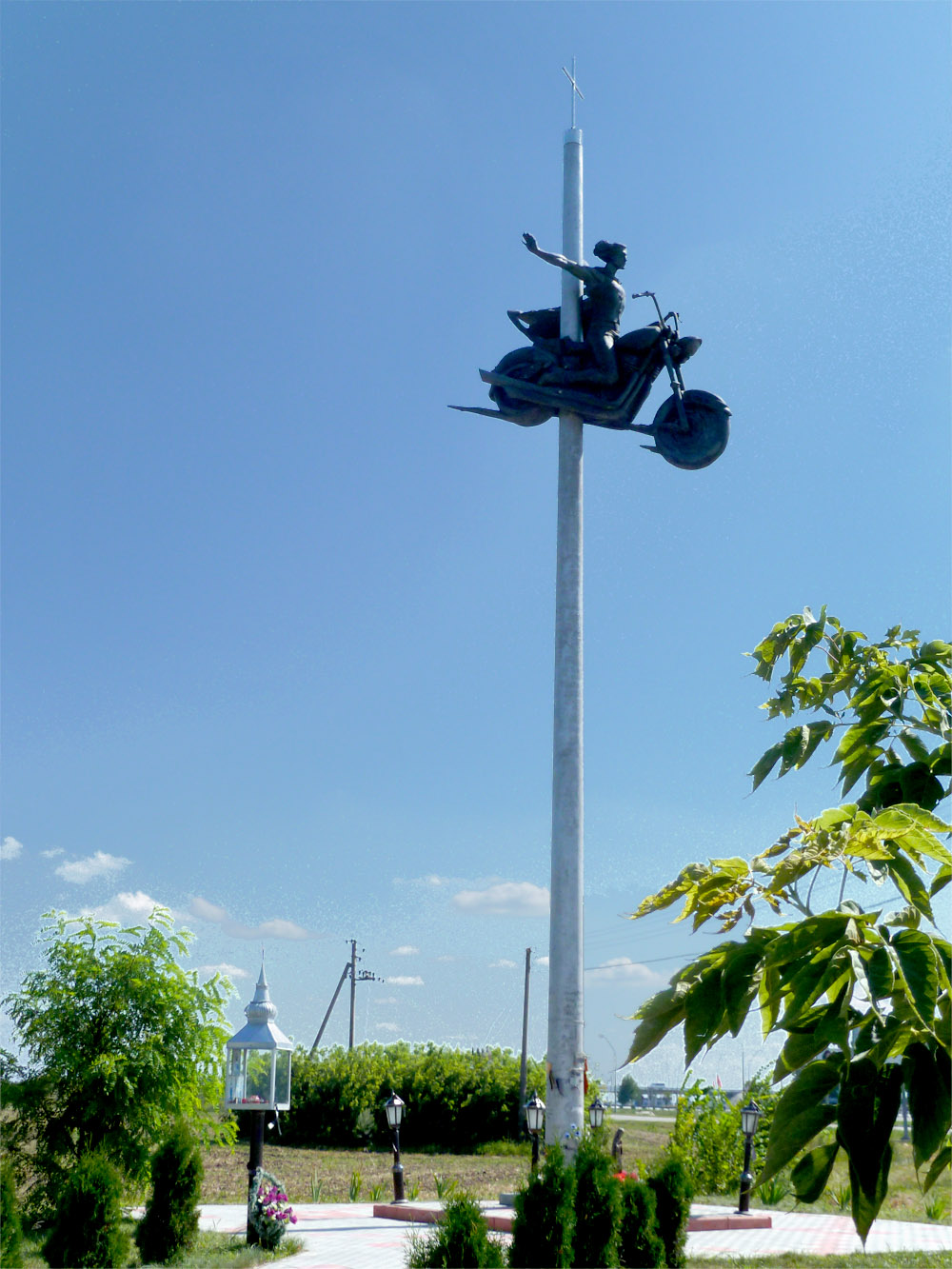
Ukrainas tegime väikese peatuse hukkunud mootorratturitele pühendatud mälestusmärgi juures.
The closer we got to Kyiv, the better and wider the roads became. The bypass around Kyiv went through a bit of the city outskirts, so we saw tall apartment buildings and wide avenues. The view of the city that opened up was very nice anyway. But the situation on the streets wasn’t so cheerful. Since it was already between five and six in the evening and there was major road construction in one place, the flow of cars sometimes moved meter by meter. The good thing was that foreign motorcyclists were treated well and allowed to merge in nicely when needed. Our journey continued toward the day’s endpoint of Chernihiv.
In Ukraine we made a small stop at a memorial dedicated to fallen motorcyclists.
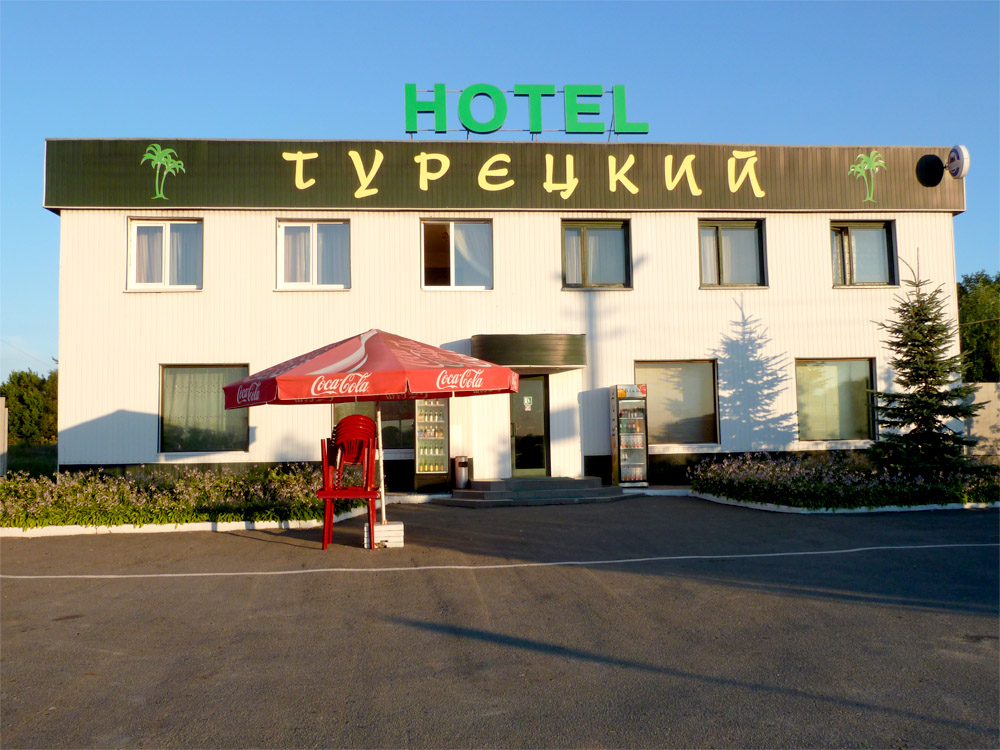
Otsus Chernigovist läbi sõita tuli meil alles eelmisel õhtul, seega meil linna kohta mingit infot ei olnud. Võtsime sihikule GPSi poolt näidatud hotelli Turetski. Kuna see asus linnast ümber mineval ringteel, siis arvasime, et see on reisilistele sobiv peatuspaik. Nii see oligi!
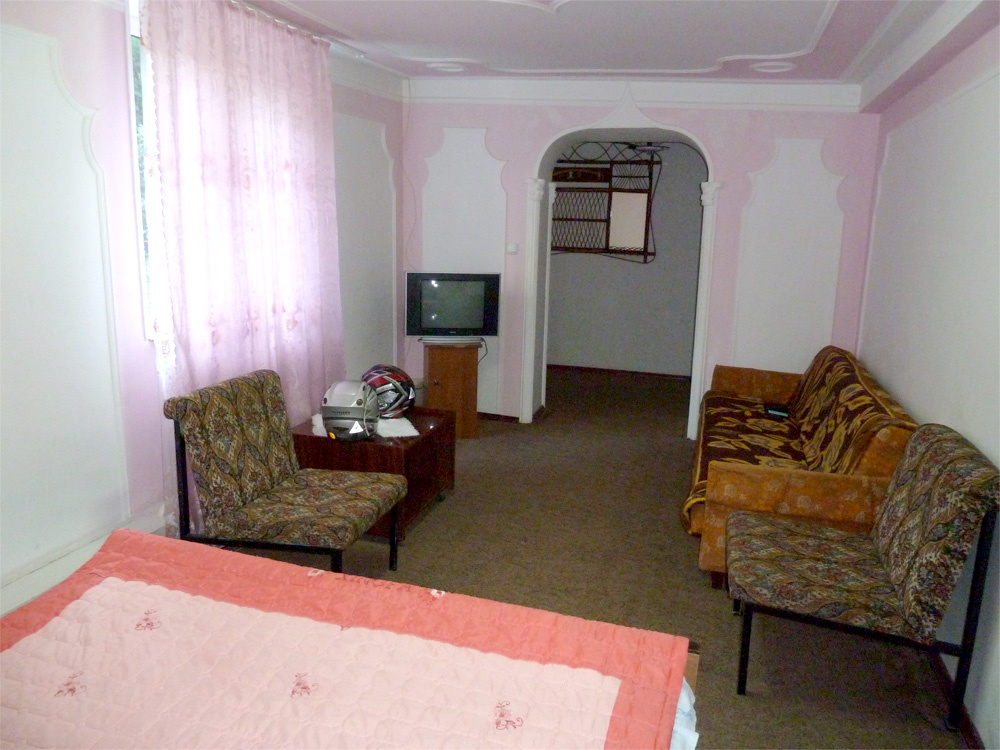
Saime toa, kus kõik vajalik olemas. Ratta panime kõrvalasuvasse valvega parklasse. Õhtul lobisesime veel pikalt Ukraina rekkajuhiga, kes korduvalt Eestis oli käinud.
Öösel käis keegi meie ukse taga ja üritas seda avada. Ei tea kas tegemist oli unise elanikuga, kes WCd otsis (osades tubades seda ei olnud ja tuli kasutada koridoris olevat käimlat) või siis väga kohmaka vargaga, sest kolinat kostus ukse tagant kõvasti.
Laupäeva veedame Valgevenet läbides.
The decision to pass through Chernihiv came to us only the previous evening, so we had no information about the city. We aimed for the hotel Turetski shown by GPS. Since it was located on the ring road around the city, we thought it would be a suitable stop for travelers. And so it was!
We got a room where everything necessary was available. We put the bike in a guarded parking lot next door. In the evening we chatted at length with a Ukrainian truck driver who had been to Estonia repeatedly.
At night someone came to our door and tried to open it. I don’t know if it was a sleepy resident looking for the WC (some rooms didn’t have one and had to use the toilet in the corridor) or a very clumsy thief, because there was quite a bit of banging from behind the door.
We’ll spend Saturday passing through Belarus.